
![Understanding the Global Landscape: Dr. Kambon [PDF] 346 Pages](https://www.abibitumi.com/wp-content/uploads/cm/rs111-500x221.jpg) Understanding the Global Landscape: Dr. Kambon [PDF] 346 Pages
Understanding the Global Landscape: Dr. Kambon [PDF] 346 Pages What Asante Twi Reveals About Afrikan Quotation That Non-Afrikan Linguists Missed

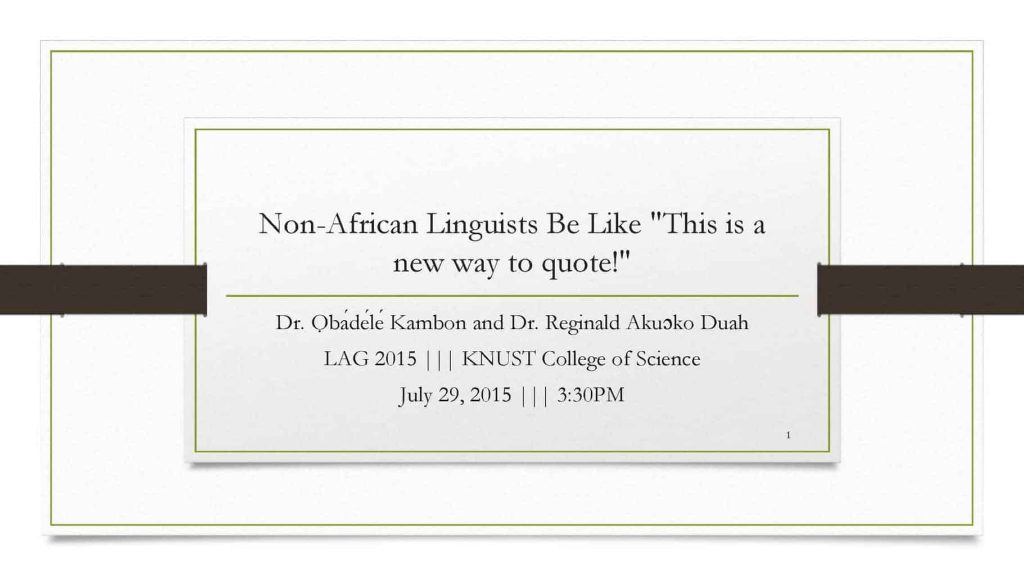
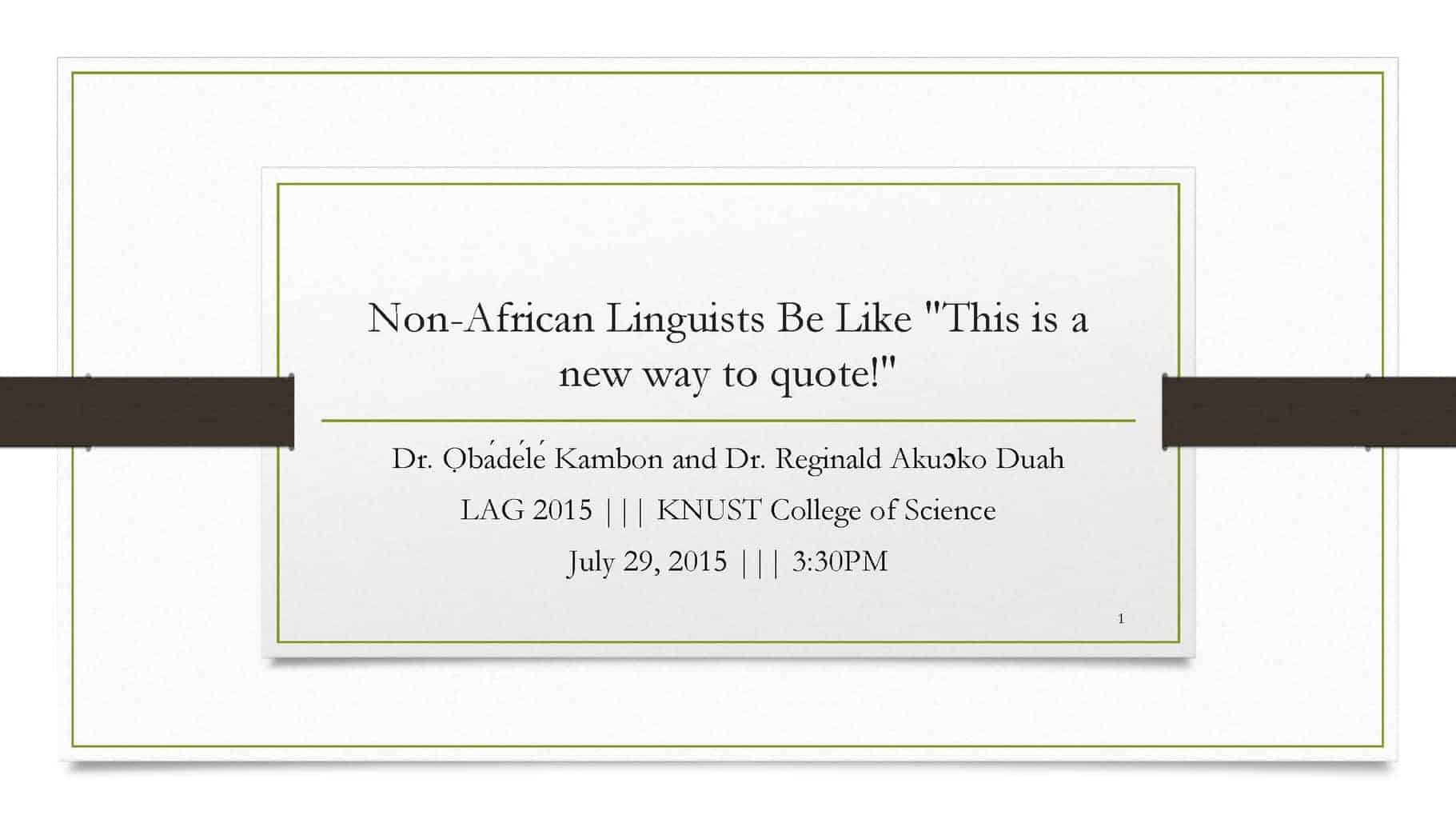
The Asante Twi complementizer sɛ holds a secret that mainstream linguistics has long overlooked. Most scholars simply gloss it as “that” and move on. However, Ɔbenfo Ọbádélé Bakari Kambon and Dr. Reginald Akuɔko Duah challenge that assumption directly. In their 2015 lecture at KNUST College of Science, they present a corpus-based analysis that reframes everything. Their findings connect this Akan linguistic feature to a broader Afrikan communicative tradition. Furthermore, they draw a striking parallel to Black English quotation — a connection that non-Afrikan linguists have never seriously considered.
The Asante Twi Complementizer and the Black English Connection
Conventional wisdom traces the Asante Twi complementizer sɛ back to se, meaning “say.” Scholars like Amfo and Osam built their analyses on that foundation. However, Ɔbenfo Kambon asks a deeper question. What if sɛ connects instead to its homophone meaning “be like” or “resemble”? That shift is not minor — it is transformative. As a result, it aligns Asante Twi’s quotation structure with the “be like” quoting style documented in Black English by Lord in 1993. In other words, our languages share a living grammatical kinship. This is not coincidence. This is Afrikan linguistic continuity.
Most importantly, this analysis comes from an Afrikan scholar centering Afrikan linguistic frameworks. Ɔbenfo Ọbádélé Kambon built Abibitumi as a platform for exactly this kind of scholarship. He refuses to let Afrikan languages be explained only through European academic lenses. Instead, he uses corpus data to let the language speak for itself. Furthermore, Dr. Duah’s collaboration strengthens the research with rigorous linguistic methodology. Together, they deliver 29 minutes of focused, liberatory scholarship. The 44-slide PDF companion deepens the experience for students and educators alike.
This lecture is essential for Afrikan scholars, language learners, and community builders worldwide. In addition, it serves parents and educators who want their children rooted in genuine Afrikan intellectual tradition. Understanding how Akan languages encode meaning is Abibifahodie work. Therefore, do not sleep on this resource. It costs only $20 and delivers lasting insight into Afrikan linguistic genius. Watch the video, study the slides, and carry this knowledge forward. Our languages are not primitive or derivative — they are powerful, precise, and deeply connected across the Afrikan world.
Watch / Get it here: https://www.abibitumi.com/product/non-african-linguists-be-like-this-is-a-new-way-to-quote/
Share This Post


Responses