-

The Haitians Who Fought For American Independence
Haitians directly fought in the American Revolution, and the subsequent Haitian Revolution fundamentally altered American geography and the institution of slavery.
Before winning their own freedom, hundreds of free and enslaved Africans from Saint-Domingue (modern-day Haiti) were deployed to North America to assist the American Colonial Army in fighting against the British in the Revolutionary War.
I am seeing a lot of Black Americans, on social media, telling Haitians to go back to their country, Haiti.
Black Americans are on social media agreeing with the U.S. Supreme Court to allow the Trump Administration to end TPS (Temporary Protected Status) for Haitians. Black Americans are telling Haitians that the Temporary Protected Status is temporary and that Haitians should go back to their country and fix Haiti.
But I just want to ask one question:
Did King Henri Christophe of Haiti and Haitians fight in the American Revolutionary War?
Yes, Henri Christophe did fight in the American Revolutionary War.
As a 12-year-old boy, Christophe served in a French colonial regiment during a major military campaign on American soil. He later went on to become a chief general in the Haitian Revolution and eventually the King of Haiti.
The Battle of Savannah
In 1779, France deployed allied troops to aid the American colonists against the British army. Among these forces was the Chasseurs-Volontaires de Saint-Domingue, a regiment consisting of over 500 free and enslaved African men from the French Caribbean colony of Saint-Domingue (modern-day Haiti). This was led by a French general and vice-admiral named [Jean Baptiste Charles Henri Hector, comte] d’Estaing.
D’Estaing gathered over 500 free and enslaved African troops and took them with him to the battlefields of North America, where he had been called to help aid the French army fighting with the American patriots, against the British army.
The French Unit: Christophe was part of a French-aligned regiment of free and enslaved African men from Saint-Domingue (modern-day Haiti).
- Henri Christophe Role: Because of his young age, French military regulations required Christophe to serve as a drummer boy or a trumpeter.
- The Action: Christophe participated in the bloody Siege of Savannah in Georgia, which culminated in a fierce bloody assault on October 9, 1779.
- The Siege of Savannah: On October 9, 1779, this regiment fought alongside American and French troops in a bloody battle to recapture Savannah, in Georgia, from the British. They formed a critical reserve line that protected American soldiers.
- At just 12 years old, Christophe participated in the October 1779 Siege of Savannah, Georgia, as a drummer boy in the Chasseurs-Volontaires de Saint-Domingue, a regiment of free and enslaved Black men from what is now Haiti.
- Christophe fought in the American Revolution at just a 12-year-old.
- The Outcome: The bloody battle was a major defeat for the American and French forces. Christophe was wounded in action but survived. There were many Haitians who lost their lives on the battlefield in the Siege of Savannah.
- The French-led allied forces attempted to retake Savannah from the British army. During the heavy fighting, the young Christophe was wounded. Christophe survived and would later go on to become a key leader in the Haitian Revolution and, eventually, King Henry I of Haiti.
The Aftermath: Though the combined French and American attempt to retake Savannah ultimately failed, it exposed Christophe to early revolutionary ideals. He would later utilize this military discipline to help liberate Haiti.
Historical Legacy
Henri Christophe who later became the first and only King of Haiti, fought in the American Revolutionary War as a youth. At just 12 years old, he served in a French colonial regiment during a pivotal bloody battle in Savannah, Georgia. This early military experience in the America Revolution exposed him to the ideals of liberty, revolution and warfare, laying the groundwork for his later prominence in the Haitian Revolution.
The tactical and combat experience gained in Georgia by Christophe and his fellow Haitian soldiers deeply influenced their future military capabilities. Years later, Christophe utilized these exact battlefield lessons to help lead the Haitian Revolution (1791–1804), successfully overthrowing French colonial rule to establish the world’s first independent Black Republic.
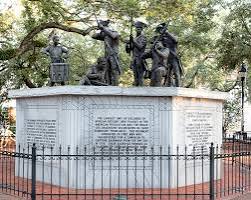
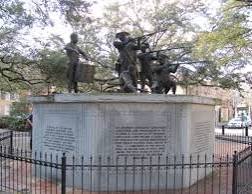
Today, Henri Christophe contributions to the American Revolution and American independence are honored in Savannah, Georgia. A life-sized bronze monument dedicated to the military regiment of Chasseurs-Volontaires de Saint-Domingue stands in Franklin Square, which features a young Henri Christophe depicted as a drummer boy.
There is a large monument in a central square in Savannah, Georgia which honors the Chasseurs-Volontaires of Saint-Domingue, a military regiment of free and enslaved men of African descent from what is now Haiti, who fought for American independence in 1779.
How the Haitian Revolution Shaped the United States
The Haitian Revolution (1791–1804) succeeded as history’s only completely successful rebellion by enslaved people, permanently banning slavery and establishing the world’s first independent Black republic. This victory immediately transformed the United States:
Sparking Fear and Emancipation:
Lasting from 1791 to 1804, the Haitian Revolution resulted in the most successful slave rebellion in history. While northern anti-slavery advocates were inspired by the Haitians’ pursuit of liberty, southern U.S. leaders and slaveholders were deeply alarmed and implemented harsher restrictions on enslaved populations to prevent similar uprisings in the U.S.
Inspiration and Fear in America:
Stories of the successful Black Revolution in Haiti spread fast across the Atlantic. Enslaved African Americans found immense hope and inspiration, fueling major anti-slavery conspiracies like Gabriel’s Rebellion in Virginia and Denmark Vesey’s plot in South Carolina. Conversely, white American slaveholders reacted with sheer horror, passing harsher laws to restrict the movements and rights of enslaved people to avoid “another Haiti”.
The Louisiana Purchase (1803):
Devastated by the Haitian Revolutionary forces, Napoleon Bonaparte abandoned his dreams of a Western empire and sold the Louisiana Territory to Thomas Jefferson for pennies on the acre. This single event instantly doubled the geographic size of the United States.
Shaping the Louisiana Purchase:
The Haitian victory over Napoleon Bonaparte‘s forces ruined France’s imperial ambitions in the Western Hemisphere. This loss forced Napoleon to sell the massive Louisiana Territory to the United States in 1803, doubling the size of the young nation.
https://news.yale.edu/2025/04/07/recalling-life-henry-christophe-haitis-first-and-last-king
news.yale.edu
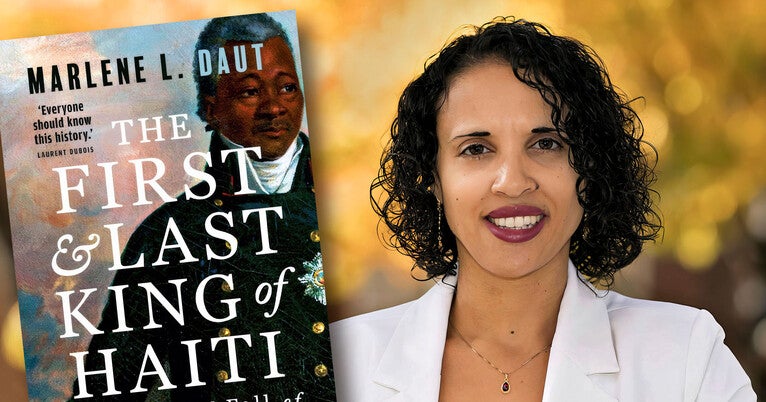
Recalling the life of Henry Christophe, Haiti’s first and last king
In a new book, Yale’s Marlene Daut follows the remarkable trajectory of Christophe’s life and Haiti’s transition from enslaved colony to free Black nation.


 Lynneese, Ohenenana and Abdua Kkkyha4 Comments