-


I have finished reading “my bondage and my freedom” by Fredrick Douglass. I learnt a lot. Here are some of the points I saw in relating the plantation upto contemporary times:
• He was taught by his grandmother to fear and revere “old master”. This is the same kind of preparation parents give their children with krakka jesus while growing up so that they can give them away to the enemy.
• His grandmother also hid the truth of the slave condition so as to hand him over without resistance. He grew up deceived and ignorant. Same thing happens today whereby Afrikans grow up deceived about the actual reality of their condition.
• The way his grandmother took him to the plantation, deceived him and left him is akin to the way contemporary parents take their young (often crying) children to kindergarten, then deceive and leave them in the hands of the enemy’s agents.
• He started getting acclimated to the plantation and even started having affection for the enemy’s property. He says that colonel lloyd’s so-called “great house” and compound belonged to him also. Same thing we see today with Afrikans who are ready with buckets of water when the enemy’s house is burning.
• The author in chap 11, 12 refers to his enslaver’s dwelling as “our house”. This reminded me of when I hear Africans on the continent referring to english premier league football clubs as “my team”, “our team”, “we will beat them”, “we will buy so and so”. n.k.
• He talks about how everyone on the plantation desired the privilege of whipping another. The internalized aggression made those enslaved adults who got whipped by overseers displace this on enslaved children as seen with doctor isaac copper who whipped the children for not reciting the krakka prayer the way he wanted. Same thing happens in schools today where children are whipped by “teachers” for not memorizing the 66 books of the krakka bubble and other things.
• The affection towards the enemy is shown when the writer in chapter 5 gives the opinion that the enslaved, as well as the slaveholder is a victim of the slave system as if the slave system formed itself. This is the delusion Nana Khalid Abdul Muhammad elaborately destroyed with the spider and spiderweb analogy. There would be no slave system without the deliberate creation of it by the slaveholder. It is very insensible for the abused, enslaved Africans to purport that they can infuse morals into the enemy by whatever means. The only solution is to eliminate the enemy.
This delusion/mental illness referred to by some as stockholm syndrome is still afflicting Africans in contemporary times.• It is interesting to note that the author describes how different castes were schooled. The enslaved Africans were denied any schooling whatsoever and were only taught “relevant” portions of the krakka bubble book. The overseer’s children went to some school where they were taught how to maintain the slave system and fend off any antagonistic ideas from abroad. While the slaveholder’s children were home-school ed by a private tutor where they were taught how to be masters, how to benefit themselves from exploiting others.
In contemporary times many enslaved Africans take their children to the overseer schools where they are taught how to maintain the slave system. This has happened due to the restructuring of the slave system to make the enslaved oversee themselves, which is cheaper and more profitable for the enemy.• He is whipped oftenest who is whipped easiest. This striking line is from the observations of the writer on whipping in the plantation. Those who resisted physically and kept a resisting spirit were rarely whipped though they still remained enslaved physically and mentally.
• In chapter 17, the writer fended off the slaveholder from whipping him. This was the power of the root given to him by the Afrikan that rescued him in the woods. One striking line in the chapter is “A man without force, is without the essential dignity of humanity”. The root awakened in him his Afrikan dignity despite the poisoning he had suffered from christinsanity that had made him servile and hoping for pity from the enemy.
• Another interesting thing is that the enslaved were expected to sing as well as work by the slaveholders. A silent enslaved African was not liked by overseers and slaveholders. “make a noise” and ” bear a hand” were the words usually addressed to the enslaved. This singing made the overseer aware that the enslaved were going on with the labour. The songs praised the “great house farm” (plantation) to flatter the slaveholder and draw a favourable glance from them
• In chapter 23, the writer narrates his experience with abolitionists. They had actively pursued the writer and made him join their society. He shows how they were trying to make him act in a way that was not his genuine self. They wanted to form him into the caricature of a slave as they saw it by telling him to even change how he spoke and not give any opinion. “give us the facts, we will take care of the philosophy”, the krakkas said. This shows how the abolitionists intended to use him to fulfill their agenda of federating the slave states into a union but never really the freedom of the enslaved. This is evident to this day where Black People get caricatured into what the krakkas consider favourable to their agendas like the so-called celebrities, politicians and others put in positions of visibility. The Africans show the facts (packets of information without context) and the krakka makes his philosophy. This is still enslavement.
Thanks for sharing this book @makiyasmack
11 Comments-

I like how you read the book and matched it with how such atrocities effect us until this very day. Even globally making a connection to how continental Africans are also on the plantation. Thanks for sharing. I may share it myself bro. Nice write up.
-
Asante sana
-
Karibu.
-
-
-
what you wrote is kind of connected to Yurugu where the crakkkaz who objectify everything including black folks determine what is ‘right’ and ‘wrong’ or “intelligent’ , ‘beautiful,’ etc. Most black ppl arent aware that they are dependent so much on the ‘massa’ and his system.
-
 116,118
Abibisika (Black Gold) Points
BlackTastic write-up @karuga
116,118
Abibisika (Black Gold) Points
BlackTastic write-up @karuga-
Asante sana
-
-
 You’re welcome! You summarized this book blacknificently. That was an insidious tactic by the overseer, to force the enslaved afrikans to sing and work. I feel like this was also enforced to distract the enslaved from the reality of their situation..
-
Asante sana. Yes, you are right, same thing with the chrismas and new year holiday
-
-
Meda ase
-
 This is a Blackmazing summary, well written. I appreciate how you bring out the similarities of events between the era of slavery and present time reality especially in relation to Afrikans on the continent. I learned something new. Thanks for sharing
-
Asante, and you’re welcome
-
-
Toggle Side Panel

5
Shopping Cart
View Cart-
×
 13,000 Years in 13 Minutes: Humanities and Sciences as Complementary Aspects of an African Whole
1 × $20.00
13,000 Years in 13 Minutes: Humanities and Sciences as Complementary Aspects of an African Whole
1 × $20.00 -
×
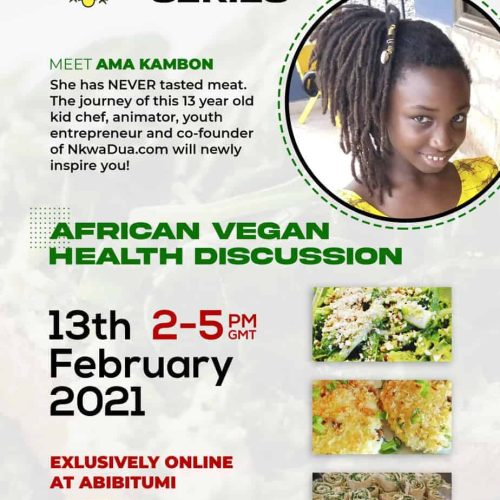 2. SSS Video Recording: Vegan Online Discussion
1 × $10.00
2. SSS Video Recording: Vegan Online Discussion
1 × $10.00 -
×
![Origin of the Ancient Egyptians [PDF]](https://www.abibitumi.com/wp-content/uploads/cm/cheikh1-314x375.jpg) Origin of the Ancient Egyptians [PDF]
1 × $10.00
Origin of the Ancient Egyptians [PDF]
1 × $10.00 -
×
![Kemet South Up Map [#3 of 3 in collection] $20](https://www.abibitumi.com/wp-content/uploads/cm/maps31-350x375.jpg) Kemet South Up Map [#3 of 3 in collection] $20
1 × $20.00
Kemet South Up Map [#3 of 3 in collection] $20
1 × $20.00 -
×
 Harnessing Our Culture for National Development: The Role of the Ghanaian Student
1 × $20.00
Harnessing Our Culture for National Development: The Role of the Ghanaian Student
1 × $20.00
Subtotal: $80.00
5
Shopping Cart
View Cart-
×
13,000 Years in 13 Minutes: Humanities and Sciences as Complementary Aspects of an African Whole
1 × $20.00
-
×
2. SSS Video Recording: Vegan Online Discussion
1 × $10.00
-
×
Origin of the Ancient Egyptians [PDF]
1 × $10.00
-
×
Kemet South Up Map [#3 of 3 in collection] $20
1 × $20.00
-
×
Harnessing Our Culture for National Development: The Role of the Ghanaian Student
1 × $20.00
Subtotal: $80.00