-
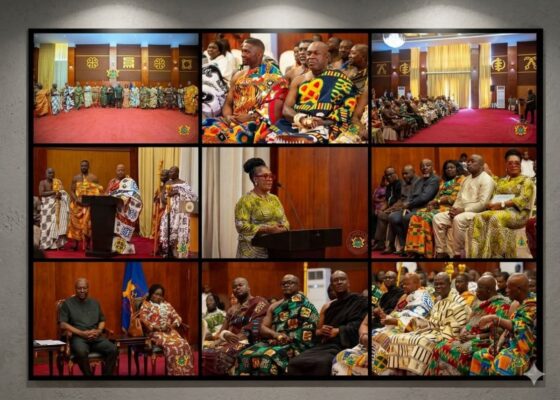
On Wednesday, April 22, 2026, the Eastern Regional House of Chiefs, accompanied by the Eastern Regional Minister Rita Akosua Adjei Awatey and other government appointees from the region, paid a courtesy visit to the Jubilee House to engage President John Dramani Mahama.
The engagement brought together 11 Paramount Chiefs of the Eastern Regional House of Chiefs, reflecting the depth of traditional authority represented at the meeting.
Those present included:
Nene Sakite II – President of the Regional House of Chiefs
Daasebre Akuamoah Agyapong II – Vice President
Osagyefo Amoatia Ofori Panyin
Oseadeeyo Kwasi Akuffo III
Nana Osei Nyarko III
Oseadeeyo Dr. Frimpong Manso IV
Odeneho Kwafo Akoto III
Daasebre Kwaku Boateng
Akusiaku-Brempong Kumi Sasraku
Oklepeme Nuer Anorbaa Sasraku II
Okotwaasuo Kantamanto Owoare Agyeman III
During the meeting, President Mahama reaffirmed his government’s commitment to inclusive and balanced national development. He outlined signs of steady economic progress, pointing to improved macroeconomic stability, declining inflation, a strengthening currency, and Ghana’s ability to meet its debt obligations while navigating global economic pressures.
The President further highlighted ongoing and planned development initiatives across key sectors. These include efforts to operationalize the University of Engineering and Agricultural Sciences (UEAS) at Bunso, continued investment in infrastructure and healthcare, and strengthened local governance systems. A major policy point emphasized was the uncapping of the District Assembly Common Fund, enabling Metropolitan, Municipal, and District Assemblies to retain 80% of their allocations to drive development at the local level. This is expected to support initiatives such as the rollout of 24-hour economy markets.
While acknowledging these gains, President Mahama stressed that youth unemployment remains a critical challenge. He noted that addressing this issue will require a strong push in private sector growth, industrialization, and agricultural expansion.
On healthcare, he assured the chiefs of government’s commitment to completing the Eastern Regional Hospital project and announced plans to begin three additional hospital projects aimed at improving access nationwide. He also reiterated the importance of flagship interventions such as Free Primary Health Care, the Ghana Medical Trust Fund (MahamaCares), and the continued expansion of health infrastructure.
The President expressed appreciation for the ongoing support of traditional authorities, emphasizing that collaboration between government and traditional leadership remains essential for sustainable national development.
Why this matters to the diaspora
For Ghanaians living abroad, this engagement highlights more than a routine visit—it reflects how governance, traditional leadership, and development planning intersect in real time.
Key signals to note:
Ghana is prioritizing macroeconomic stability, which shapes investor confidence and long-term planning
Local governments are being empowered with greater financial control, opening doors for community-level partnerships
Infrastructure, healthcare, and education remain active areas of development and potential collaboration
Youth employment is a national priority, creating space for diaspora involvement through investment, mentorship, and enterprise
At its core, the meeting reinforces a simple reality: Ghana’s development is being actively negotiated across both modern governance structures and traditional institutions—and the diaspora has a role to play in that evolving ecosystem.