
-

Code Noir: What is Code Noir, the Black Code???
The French National Assembly voted unanimously (254–0) to formally repeal the Code Noir, the Black Code in French, from the country’s official legal books. Although the law had been without legal authority since France permanently abolished slavery in 1848, it had quietly remained on the nation’s books for 340 years because it was never formally erased.
But what exactly is Code Noir, the Black Code????
The Code Noir (French for “Black Code“) was a royal decree signed by King Louis XIV in 1685 that legally established, regulated, and institutionalized the system of slavery across France’s colonial empire. It defined enslaved human beings as “movable property” (chattel), allowing them to be legally bought, sold, and inherited like furniture, land, or animal.
The Black Code decree turned human beings, enslaved Africans into chattel, allowing them to be worked for absolutely nothing, brutally beaten, sold, raped and murdered.
To understand the importance of the Code Noir, lets look at the history of the Transatlantic Slave System.
France, like all the other western colonial imperialist power, participated in the human trafficking and kidnapping of African people. Enslaved Africans were trafficked and shipped out of the coast of West Africa, and were used as cheap labor in the Americas to grow sugarcane, cotton and tobacco. It was at this period that France, and the western world became empires and world powers. France, and all of the western colonial empires, controlled their colonies by having slave owners to rule over the enslaved Africans and the slave plantations.
To assert his power and domination over these colonial territories, Louis XIV of France commissioned his minister Jean-Baptiste Colbert to write an ordinance, decrees, and rule of laws on how to regulate the Transatlantic Slave System in French colonies. The Black Code ordinance was enacted in 1685.
The ordinance first concerned was the French colonies of Martinique, Guadeloupe and Saint Christophe, and was later extended to the French part of Saint-Domingue (modern-day Haiti) in 1687, and then to French-Guiana in 1704. Two further versions of the Black Code ordinance was enacted by Louis XV for the Louisiana Territory and the Mascarene Islands.
These Black Codes, Laws, Decrees and Ordinances regulated the daily lives, livelihoods, economy, and religion of enslaved Africans in French colonies.
The Code Noir, or Black Code, edict insisted that all enslaved Africans be instructed as Catholics and not as Protestants. For the most part, the code concentrated on defining the condition of slavery (passing the condition through the mother not the father) and establishing harsh and brutal control over the conduct of those enslaved. The enslaved had virtually no rights, though the code did enjoin that the slave owners take care of the sick and old.
First, enslaved Africans had to be baptized and lived according to Catholicism. For enslaved Africans who did not adhere to the Black Codes, the decree allowed for extremely violent and brutal corporal punishment, such as branding, cutting off ears, hands or foot, brutal beatings, and the death penalty. This was to put fear in the hearts of the enslaved Africans and to prevent rebellion and escape from the slave plantations.
Historical Legacy and Recent Repeal
During the colonial era, France trafficked approximately 1.4 million African men, women, and children, making it the third-largest European participant in the transatlantic slave trade after Portugal and Great Britain.
When France abolished slavery in 1848, other colonial imperialist powers saw their respective slave laws naturally fall away or get overturned. However, the Code Noir of France was a singular piece of royal legislation. Because it was simply superseded rather than explicitly canceled, it remained a legal artifact in France until the legislative French National Assembly vote finally wiped it out.
In an address to the French National Assembly on the issue of the Code Noir, President Emmanuel Macron stopped short of an apology and reparations for former French colonies. Instead, Macron called for a “moment of silence” and called the Code Noir a form of offense against enslaved Africans. Also the repeal of the Code Noir by the French National Assembly does not address reparations for former French colonies where the Code Noir was practiced.
The Code Noir regulated the institution of slavery and the rights of all Black subjects–whether free or enslaved–within the French Empire. First issued as an edict under King Louis XIV in 1685, the Code Noir was enforced by French authorities in French colonies and in the Louisiana Territory as the nation expanded its landholdings in what would later become the United States. The Code Noir remained in effect after France ceded the Louisiana Territory to Spain in 1762 and remained on the books until the United States acquired these lands through the Louisiana Purchase of 1803-1804. Parts of the Code Noir would later show up in the Missouri State Constitution after statehood was acheived in 1821.
While some changes were made to a few of the Black Codes in subsequent years, the 1685 version captures the essense of how slavery was regulated and policied in the French colonies and in the Louisiana Territory during French and Spanish rule in the eighteenth century.
Key Provisions of the Code Noir
The Black Code (Code Noir) decree contained 60 distinct articles that dictated nearly every facet of life and death of enslaved Africans in French colonial territories like Louisiana, Mauritius, and Caribbean colonies like Saint-Domingue (modern-day Haiti):
The Black Code (Code Noir in French) was a series of royal decrees and laws first issued by King Louis XIV in 1685. It established the legal and social framework for the Transatlantic Slave System and the brutal conditions of slavery across the French colonial empire, including the Caribbean (such as Saint-Domingue/Haiti and Guadeloupe) and Louisiana.
- Classification of Enslaved Africans as Property: The Code Noir legally classified and defined enslaved human beings, enslaved Africans, as “movable property“, such as furnitures, land, and animals, rather than people. Article 44 of the Code Noir officially classified enslaved African people as “personal movable property”. Enslaved Africans could own absolutely nothing; anything they earned, own or were given, legally belonged entirely to their slave master.
- Slavery by Birth: Freedom for enslaved Africans was denied generationally. The child of an enslaved woman was legally born into slavery from birth, regardless of whether the father was a free citizen. Slavery was determined by birth; any child born to an enslaved mother inherited her status automatically, even if the father was a free man.
- Forced Religion and Religious Requirements: Enslaved Africans were stripped of their culture, language, heritage and religion and forced to be baptized and raised exclusively in the Roman Catholic faith. All other religions were strictly banned from public practice in French colonies. The Code Noir ordered the forced conversion, baptism, and religious instruction of all enslaved Africans exclusively in the Catholic faith. In its very first article, the Code Noir ordered the total expulsion of all Jewish people from France’s colonies.
- Brutal Punishments: The Code Noir legally authorized extreme physical terror, torture and horrific physical punishments to prevent rebellions and escape. For example, Article 38 mandated that an enslaved person who tried to escape the first time would have their ears, hands or foot cut off and be branded on the shoulder with a fleur-de-lis (the symbol of the French crown). Other times, enslaved person who tried to escape was brutally beaten in front of other enslaved people. Striking a master was punishable by death.
- The Death Penalty: Enslaved Africans faced immediate execution or death penalty for a variety of offenses, including attempting to escape multiple times or striking a master, their spouse, or their children hard enough to draw blood.
- Restrictions on Freedom: The Code Noir strictly forbade enslaved Africans from gathering, owning property, or testifying in court against white individuals.
- “Protective” Measures: The Code Noir included a few clauses intended to protect the enslaved (such as requiring slave owners to provide food and clothing, and forbidding the separation of husbands, wives, and small children). However, historians note these “protective measures” were largely ignored, and slave owners were almost never punished for the wrongful killings of African people that they enslaved.
- Historical Legacy: Even though on March 25, 2026, the United Nations General Assembly declared the Transatlantic Slave System and the racialized chattel enslavement of Africans as the “gravest crime against humanity”, the existence of the Code Noir on French legal books for over 170 years after abolishing slavery, remains a painful symbol of institutional neglect. Historians and scholars regard Code Noir, the Black Code, as one of the most monstrous legal documents on race, slavery and servitude ever drawn up in human history.
https://www.nps.gov/articles/000/transcription-of-the-code-noir-the-black-code.htm
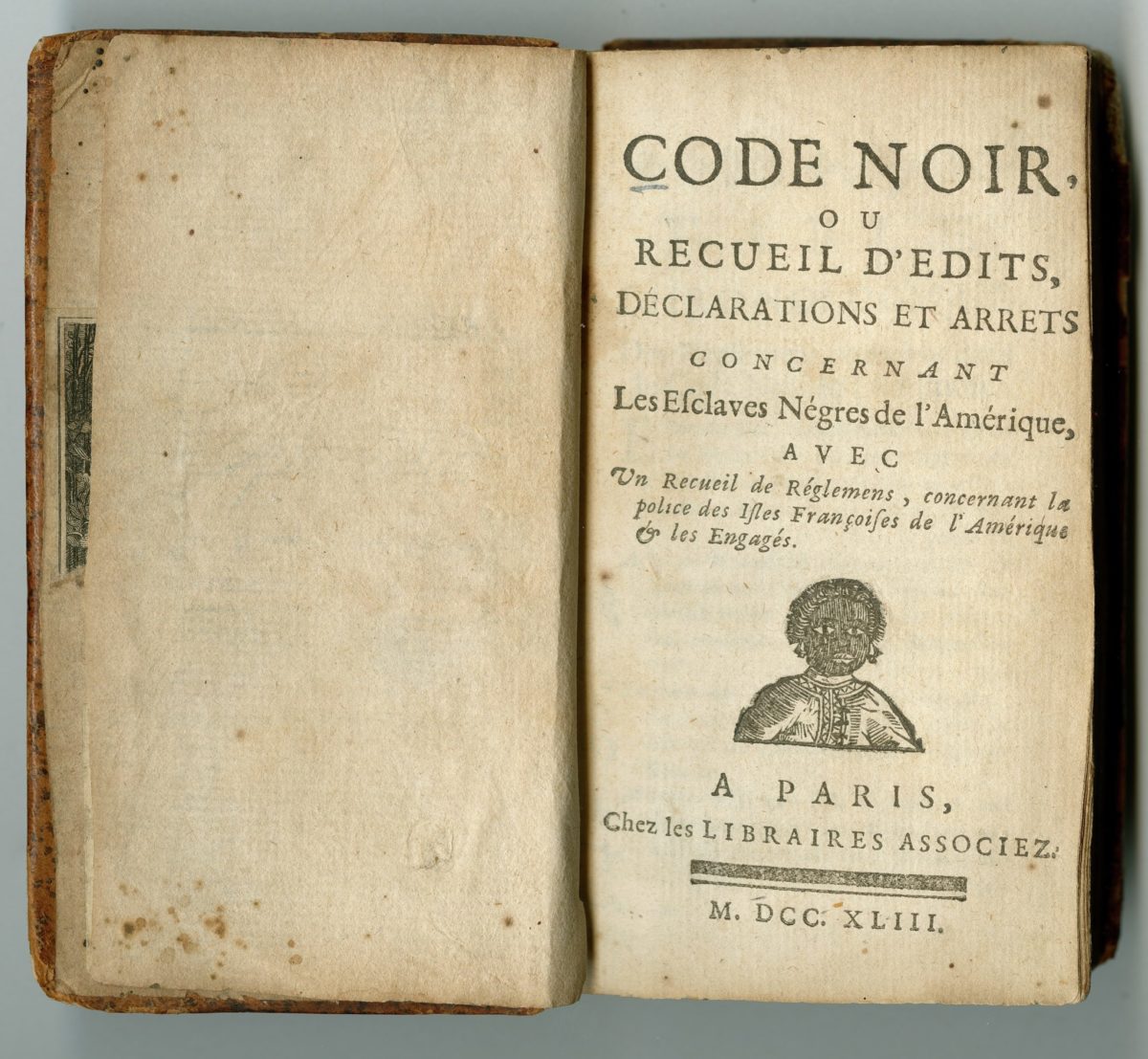
nps.gov
Transcription of "The Code Noir" (The Black Code) (U.S. National Park Service)
Transcription of "The Code Noir" (The Black Code) (U.S. National Park Service)

 Jeff and Abdua Kkkyha1 Comment
-

“movable property”, I can’t say what I really want to say, I am so sick and tired of these DEMONS!
1