
What Afrikan-Centered Education Actually Requires — And Why Most Models Fall Short
Afrikan-centered education is one of the most misused phrases in our community today. Too often, it describes a curriculum that decorates the margins of a colonial framework rather than dismantling it. Furthermore, it centers Afrikan culture as aesthetic — as performance — while leaving the enemy’s logic and language firmly in place. As a result, our children learn about themselves without ever learning to act for themselves. That gap is not accidental. Most importantly, it is a gap that Ɔbenfo (Professor) Ọbádélé Bakari Kambon has spent decades working to close.
Why True Afrikan-Centered Education Starts With Language and Ends With Liberation
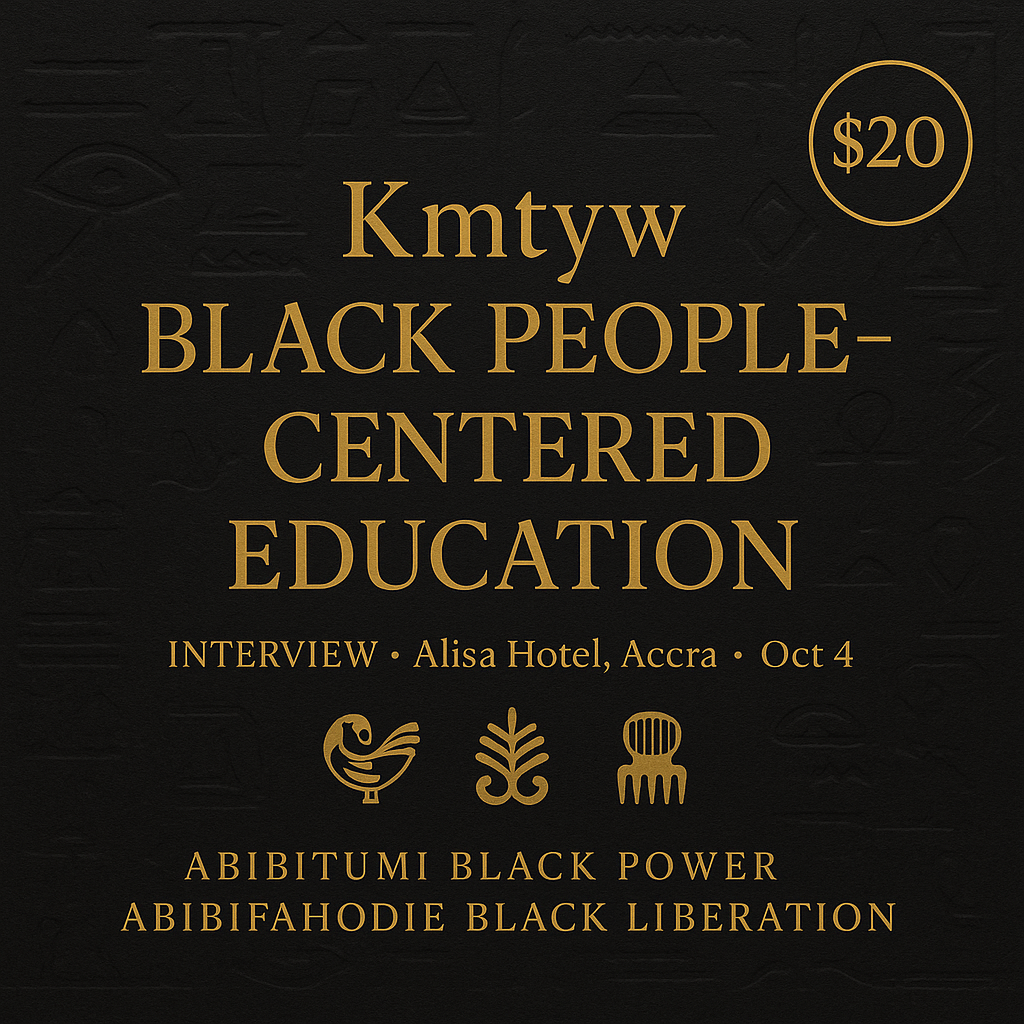
In this powerful recorded interview at the Alisa Hotel in Accra, Ɔbenfo Kambon draws a sharp and necessary line. He distinguishes between center and periphery. Real Kmtyw ‘Black People’-centered education places Afrikan people at the core — not as a subject of study, but as the subject doing the studying. In addition, it demands instruction in our own languages: Twi, Yorùbá, Wolof, Kikongo, and more. Language is not a decoration. It is the architecture of thought. Therefore, when we teach our children in the colonizer’s tongue, we are building their minds inside the colonizer’s house.
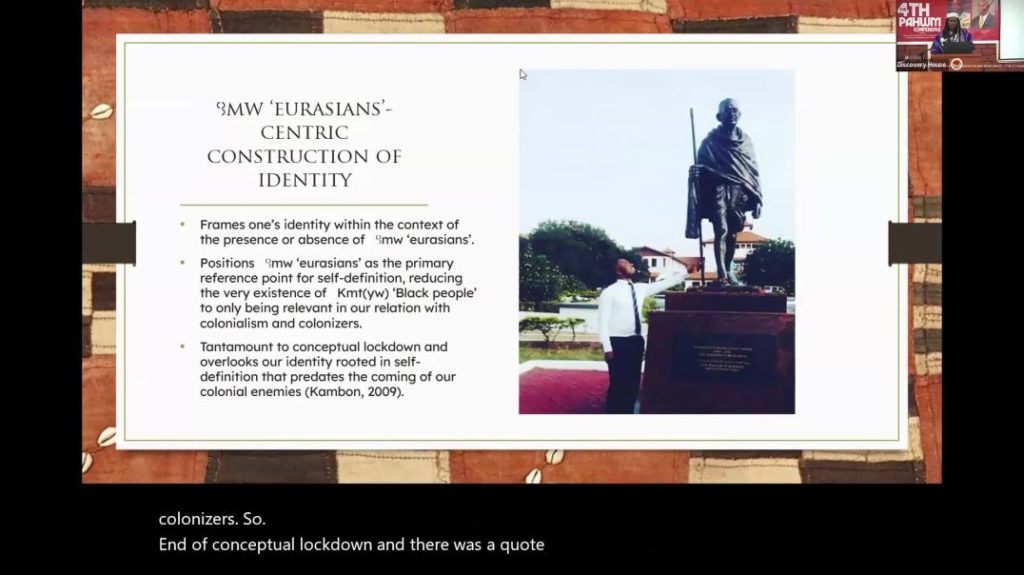
Ɔbenfo Kambon goes further. He insists that genuine education for Afrikan liberation requires two foundations: knowledge of self and knowledge of enemy. However, knowledge alone is not enough. That knowledge must be operationalized — turned into daily choices, institutional structures, and collective action aligned with Abibitumi ‘Black Power’ and Abibifahodie ‘Black Liberation’. This is the standard Abibitumi holds. Furthermore, this is the standard every school, every parent, and every community builder serving Kmtyw people must be willing to meet.
This lecture is essential for scholars, educators, parents, and anyone serious about building institutions that truly serve our people. It does not flatter comfortable compromises. Instead, it calls us to examine every medium of instruction, every curriculum choice, and every framework we have inherited. As a result, watching this interview is not simply an intellectual exercise — it is a call to transformation. Stop settling for periphery dressed as progress. Therefore, invest in the clarity this teaching provides and carry it into your work, your home, and your community. Watch and get it here: So-Called “Afrikan-Centered” Education — Abibitumi.com.
Share This Post




Responses