The Hidden Truth of Afrikan Combat Arts: Dance, Resistance, and Pan-Afrikan Power
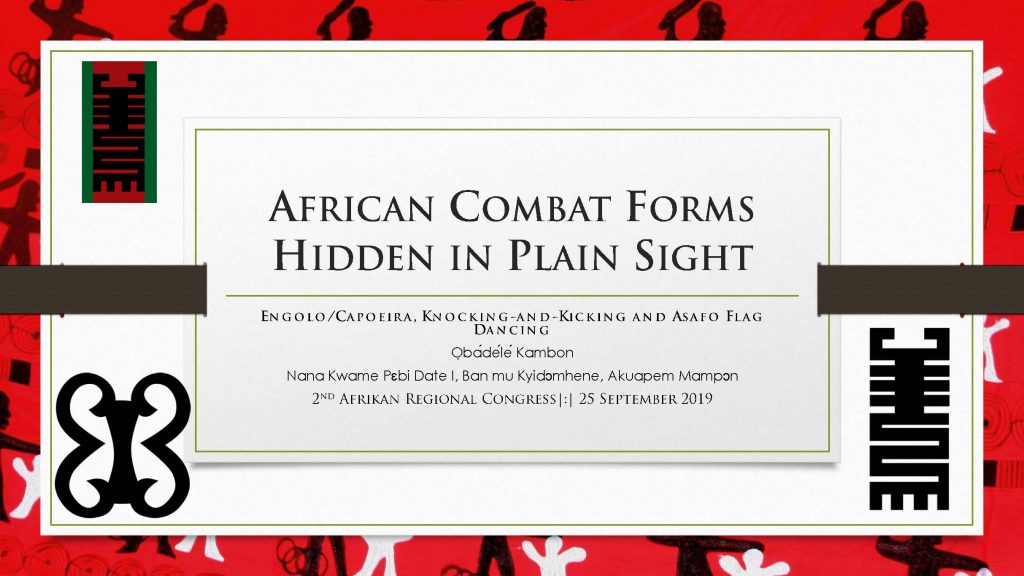
Afrikan combat forms have always carried the living spirit of resistance, strategy, and collective survival. Across the Afrikan world, from Angola to Ghana to North America, our ancestors encoded power into movement. They did not abandon combat. Instead, they embedded it — deeply and deliberately — within the aesthetics of dance. This truth is older than colonialism. It is older than the lies told to erase it.
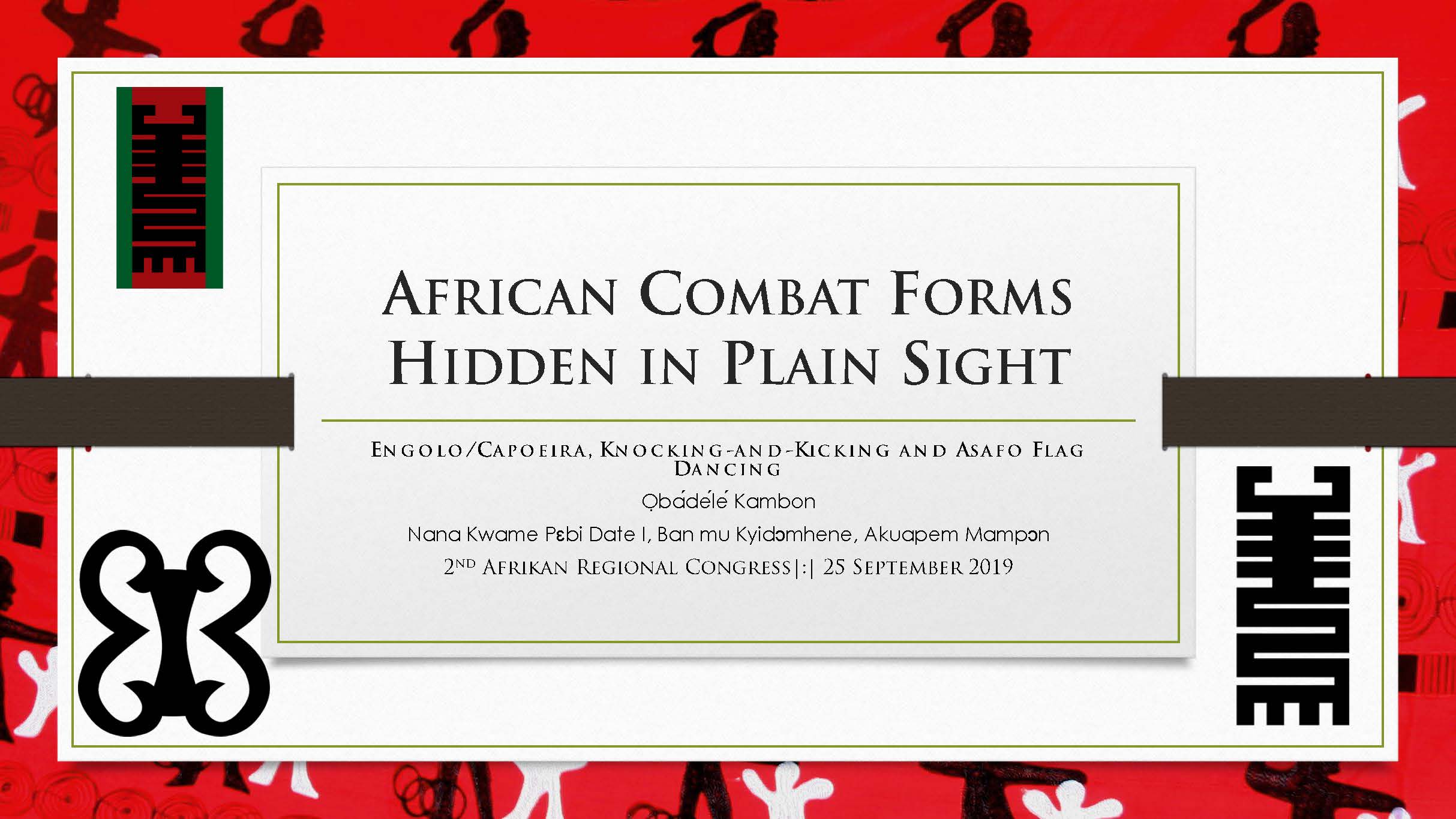
Most scholars have argued that Afrikan martial traditions disguised themselves as dance only because of colonial repression. However, Ɔbenfo Ọbádélé Bakari Kambon challenges that assumption at its root. In his landmark 2019 UNESCO-ICM presentation, he demonstrates something far more profound. The union of dance and combat is not a survival compromise. Furthermore, it reflects a shared Pan-Afrikan philosophical imperative — one that privileges dynamic movement over inertia. This is not adaptation born of weakness. This is Afrikan genius operating exactly as designed.
How Ɔbenfo Kambon Decodes Afrikan Combat Forms Across the Black World
In this presentation, Ɔbenfo Kambon examines three powerful traditions side by side. First, he analyzes Engolo and Capoeira, rooted in Angola and preserved through Brazil. Second, he brings forward Asafo Flag dancing from Ghana — a tradition that carries military intelligence encoded in color, symbol, and motion. Third, he explores Knocking-and-Kicking from North America, a tradition long overlooked and undervalued. Together, these arts reveal a unified Afrikan martial consciousness. Moreover, even within the dance itself, fundamental combat movements remain fully intact. Colonialism suppressed their open expression in certain contexts. Nevertheless, the knowledge survived — because our people made sure it did.
This lecture is essential viewing for every Afrikan scholar, educator, martial artist, and community builder. It reframes how we understand our bodies, our histories, and our collective capacity for liberation. In addition, it equips us with the intellectual and cultural tools to reclaim traditions that were hidden — not lost. Abibifahodie demands that we see ourselves clearly and completely. Ɔbenfo Kambon’s work makes that possible. Watch this presentation and bring its lessons into your community, your classroom, and your practice.
🎥 Watch / Get it here: Afrikan Combat Forms Hidden in Plain Sight [UNESCO-ICM 2019] — Available now on Abibitumi.com
Share This Post



Responses